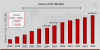
(EMAILWIRE.COM, June 30, 2025 ) The micro-mobility market size was volumed at USD 101.02 billion in 2023. The micro-mobility market industry is projected to grow from USD 114.15 Billion in 2024 to USD 303.47 billion by 2032, exhibiting a compound annual growth rate (CAGR) of 13.00% during the forecast period (2024 – 2030)
Request Sample Report; https://www.marketresearchfuture.com/sample_request/8315
The micro mobility market is evolving rapidly as cities around the world prioritize sustainable and efficient transportation solutions. Micro mobility refers to lightweight, typically single-passenger vehicles such as electric scooters, bicycles, e-bikes, and hoverboards designed for short urban trips. These vehicles are generally either human-powered or electric and are ideal for last-mile connectivity, especially in congested urban environments.
The market has experienced significant growth over the past decade, spurred by urbanization, environmental awareness, rising fuel costs, and advances in electric vehicle technology. The ongoing digital transformation of transportation networks, combined with increasing government focus on reducing carbon emissions, is further propelling the adoption of micro mobility.
In recent years, micro mobility has transitioned from a trend to a core component of urban mobility infrastructure. Electric-powered micro vehicles now dominate the market, supported by advancements in battery technology and charging infrastructure. The integration of smart sensors, GPS tracking, and mobile applications has also contributed to improved fleet management and user convenience. These developments are encouraging both public and private investment in the sector, fostering robust market growth across various regions.
Market Trends
Several trends are shaping the current landscape of the micro mobility market. One of the most significant is the shift from dockless to hybrid or docked systems. While dockless solutions offer convenience, they have also led to urban clutter and theft, prompting many cities to reintroduce docking stations for better organization and security.
At the same time, companies are exploring battery swapping models to reduce vehicle downtime and improve operational efficiency. This innovation allows users or fleet operators to exchange depleted batteries for fully charged ones at designated stations, ensuring that vehicles are always ready for use.
Another key trend is the expansion of subscription-based micro mobility services. Rather than paying per ride, users can now access unlimited rides through weekly or monthly subscriptions. This model enhances user retention and provides a more stable revenue stream for service providers. Moreover, micro mobility companies are increasingly adopting data analytics and artificial intelligence to optimize fleet deployment, maintenance schedules, and user safety. These tools enable predictive maintenance and demand forecasting, resulting in better service quality and reduced operational costs.
Technological improvements have also made micro mobility vehicles more durable and efficient. Lightweight frames, regenerative braking systems, and improved suspension have enhanced ride comfort and safety. Additionally, integration with public transit systems is gaining traction. Cities are working toward seamless multi-modal transportation networks, allowing commuters to switch effortlessly between buses, trains, and micro mobility vehicles through integrated payment systems and digital platforms.
Micro Mobility Key Market Players
Major market players are expending a lot of money on R&D to grow their product lines, which will boost the micro-mobility market. Competitors are also taking advantage and initiatives to rise through with key market developments such as new product launches, contractual agreements, mergers and acquisitions, increased investments, and collaboration with other corporations.
Key Companies in the micro-mobility market include;
Yellow Scooters (US)
Bird Rides Inc. (US)
Lime Scooter (US)
Micro Mobility Systems AG (Switzerland)
ofo Inc. (China)
Mobike (China)
Motivate (Lyft) (US)
Pride Mobility Products Corp. (US)
EV RIDER LLC (US)
Golden Technologies (US)
Merits Co. Ltd (Taiwan)
Invacare Corporation (US)
Segway, Inc. (US)
Ninebot Limited (China)
Lime Electric Bikes and Scooters (US)
Scoot Networks (US)
Uber Technologies Inc. (US)
Lyft Inc. (US)
TIER Mobility GmbH (Germany)
Buy Complete Report; https://www.marketresearchfuture.com/checkout?currency=one_user-USD&report_id=8315
Regional Analysis
Regionally, Europe leads the global micro mobility market. The region’s strong regulatory framework, environmental policies, and commitment to green transportation have fostered a supportive ecosystem for micro mobility. Major cities like Paris, Berlin, and Amsterdam have heavily invested in cycling lanes, pedestrian zones, and shared mobility platforms. Government incentives and infrastructure development have accelerated the deployment of shared micro mobility services, making them a common sight across urban areas.
North America, particularly the United States and Canada, follows closely behind in market adoption. The micro mobility trend initially took off in large urban centers like San Francisco, Los Angeles, and New York, where traffic congestion and parking limitations created a demand for compact transportation alternatives. Over time, smaller cities have also adopted micro mobility solutions, aided by local government support and federal infrastructure investments. However, regulatory inconsistencies between cities and states sometimes hinder uniform growth.
The Asia-Pacific region is witnessing the fastest growth in the micro mobility sector. Countries such as China, India, Japan, and South Korea are investing heavily in electric vehicle technology and smart city initiatives. China, in particular, dominates the manufacturing and deployment of electric two-wheelers, with millions of shared bikes and scooters in operation.
India is also emerging as a key market, driven by urbanization, a growing middle class, and a strong demand for affordable transportation. Southeast Asia is showing promise as well, with companies expanding their fleets in cities like Bangkok, Jakarta, and Manila.
In Latin America and the Middle East, the micro mobility market is still in its nascent stage but growing steadily. Urban density, high fuel prices, and a young, tech-savvy population are driving demand in cities like São Paulo, Buenos Aires, and Dubai. Governments in these regions are beginning to recognize the value of micro mobility in reducing congestion and emissions and are updating regulations accordingly.
Browse more insights; https://www.marketresearchfuture.com/reports/micro-mobility-market-8315
Recent Developments
The micro mobility market has seen several noteworthy developments in the past year. Industry consolidation is becoming a defining characteristic, with mergers and acquisitions creating larger, more efficient operators. Companies are combining resources to expand their geographic reach, improve operational scale, and offer a broader range of vehicles. These strategic moves aim to create sustainable business models in an industry that has struggled with profitability due to high maintenance and operational costs.
International expansion is another important theme. Leading micro mobility firms are entering new markets across Asia, Europe, and Latin America. Some are customizing their offerings based on local regulations, infrastructure, and user behavior. This localization strategy includes providing seated scooters, helmets, and multilingual apps to improve safety and user experience.
Governments are playing an increasingly proactive role in shaping the micro mobility landscape. Regulatory reforms are being introduced to ensure safety, prevent vehicle clutter, and protect pedestrians. In some regions, authorities are requiring micro mobility companies to share data and implement standardized parking solutions. New infrastructure investments, such as charging stations, mobility hubs, and protected bike lanes, are also being rolled out to support the growth of micro mobility.
Technology remains a driving force in market development. Fleet operators are deploying smart lock systems, anti-theft mechanisms, and geofencing to enhance vehicle security and compliance. The use of machine learning algorithms to assess route safety, weather conditions, and road traffic is also on the rise. Additionally, partnerships with automotive OEMs and battery manufacturers are enabling micro mobility companies to develop higher-quality vehicles with longer lifespans and better energy efficiency.
Challenges and Opportunities
Despite its momentum, the micro mobility market faces several challenges. Regulatory uncertainty, especially in developing nations, can delay deployment and create operational hurdles. Vandalism, theft, and maintenance costs remain significant concerns for service providers. There is also the question of equitable access, as micro mobility services often concentrate in affluent neighborhoods, leaving out underserved communities.
However, the opportunities outweigh the challenges. As cities continue to grapple with pollution, congestion, and climate change, micro mobility offers a low-cost, low-emission solution. The integration of these services into urban transport planning is accelerating, supported by public and private investment. With ongoing innovation in technology, business models, and infrastructure, the market is poised for sustained growth in the coming years.
The micro mobility market has matured into a key component of the global urban transportation ecosystem. Supported by environmental awareness, smart city initiatives, and technological advancements, it provides a scalable, sustainable solution to many urban mobility challenges. While hurdles remain in the form of regulation and infrastructure gaps, the outlook is overwhelmingly positive. As shared, electric, and intelligent vehicles continue to evolve, micro mobility will play an essential role in shaping the future of how cities move.
Explore Related Reports
Golf Cart Battery Market
Electric Vehicle Market
Automotive Electric Bus Market
Hydrogen Fuel Cell Vehicle Market
market research future.
Market Research Future
+1 (646) 845 9349
info@marketresearchfuture.com
Source link